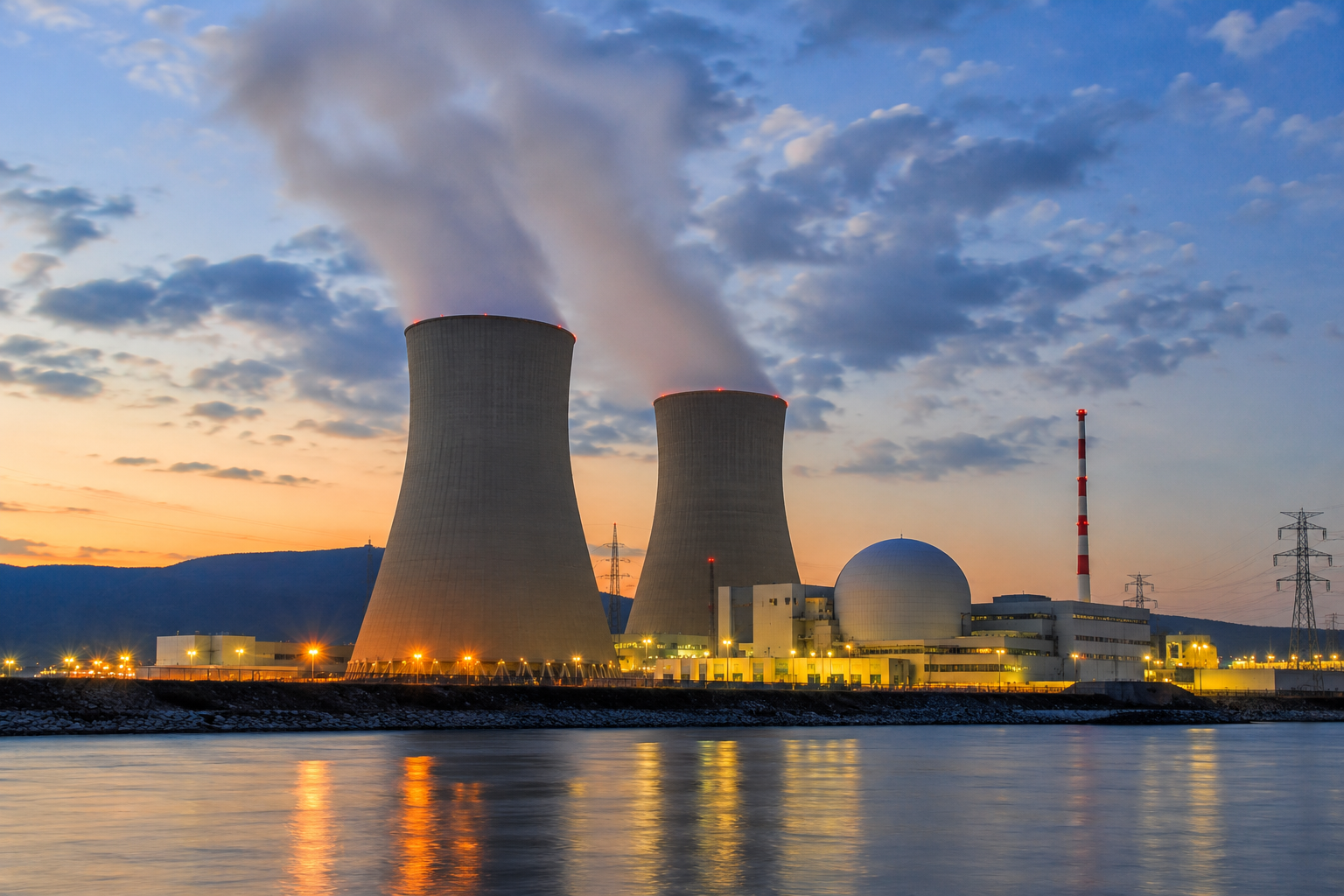
India faces an energy crisis that few investors fully appreciate. Not the kind that dominates headlines, but the kind that quietly reshapes capital flows, industrial policy, and long-term economic growth.
The country currently operates roughly 533 GW of installed power capacity, with thermal energy still accounting for nearly half of total generation. India’s target of achieving 500 GW of non-fossil fuel capacity by 2030 increasingly appears less like an ambition and more like an unavoidable economic necessity.
533 GW
India’s installed power capacity
By April 2026, India had already reached approximately 283 GW of non-fossil capacity. To bridge the remaining gap, the country must continue adding more than 50 GW of clean capacity annually for years to come.
Why the Renewable Story Is Incomplete
Most investors assume solar, wind, and hydroelectric power will naturally dominate India’s transition. The reality is far more complicated.
Hydropower remains geographically constrained, expensive, environmentally disruptive, and highly vulnerable to long construction delays. Large dams frequently take over a decade to complete while experiencing major cost overruns.
Wind energy suffers from low reliability as a baseload power source and requires enormous land allocation in a country already facing infrastructure density constraints.
Solar energy offers rapid deployment advantages but still depends heavily on imported Chinese components, shorter asset life cycles, and vulnerable supply chains.
“The renewable story is incomplete. And that incompleteness matters for investors.”
The Nuclear Advantage
A single nuclear facility can continuously produce between 1 and 1.5 GW of electricity at capacity utilization rates between 80% and 90%, the highest scalable clean-energy efficiency available to India.
80–90%
Typical nuclear power capacity factor
Unlike solar or wind, nuclear generation does not depend on weather conditions, seasonal cycles, or imported manufacturing ecosystems. It offers stable baseload electricity critical for industrial growth and grid reliability.
Today, nuclear power contributes only around 8.78 GW to India’s total installed power base, roughly 2% of national capacity. The government’s long-term target aims for approximately 100 GW by 2047.
100 GW
India’s nuclear target by 2047
The Investment Opportunity
The scale of India’s nuclear expansion implies one of the largest infrastructure spending cycles in modern Indian history.
Based on current benchmark projects such as Kudankulam and Gorakhpur, a modern 1 GW nuclear facility may cost approximately ₹20,000–22,500 crore before accounting for delays and escalation.
Applying these economics to India’s 90 GW expansion requirement suggests cumulative capital expenditure could ultimately exceed ₹20–30 lakh crore over the coming two decades.
₹30 Lakh Cr
Potential cumulative nuclear CapEx
“Nuclear energy spending will likely become massive, sustained, and unavoidable.”
What This Means
If India successfully executes its nuclear ambitions, the implications extend far beyond electricity generation. Stable low-emission power could strengthen industrial competitiveness, accelerate electric vehicle adoption, reduce pollution, and improve long-term energy security.
The challenge is execution. India’s history of infrastructure delays remains a major risk factor. But if execution improves, nuclear energy could become one of the defining macroeconomic and investment themes of modern India.
“If harnessed correctly, nuclear energy could become one of the turning points in India’s path toward developed nation status.”
Oil prices influence far more than energy markets. They shape inflation, currency strength, central bank decisions, and stock market valuations across the global economy.